 Can My Statements Be Used Against Me At Trial? Understanding Miranda By Indiana Criminal Lawyer Josiah Swinney
 Can My Statements Be Used Against Me At Trial? Understanding Miranda By Indiana Criminal Lawyer Josiah Swinney
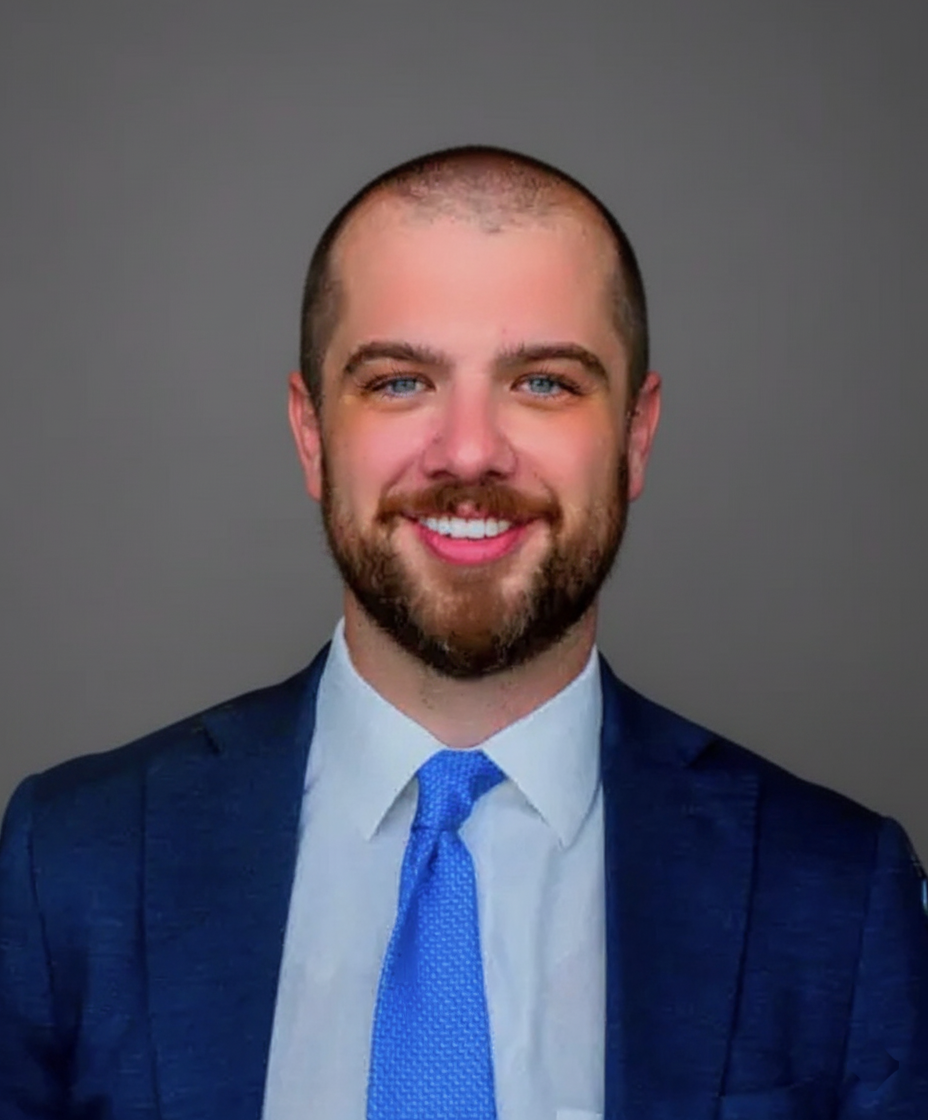
Josiah Swinney is a distinguished criminal attorney based in Indianapolis, Indiana. Josiah is renowned for his exceptional litigation skills and unwavering dedication to defending the rights of his clients. With a career marked by a reputation for excellence, Josiah has become a formidable trial attorney. Call Josiah directly at 317-753-7134 or Josiah@DefenseLawIndiana.com for a free consultation about any criminal matter in the State of Indiana. One of the most common issues that arises in a criminal trial is the admissibility of evidence that implicates Miranda Rights. As a skilled criminal trial attorney who litigates often, Josiah has a deep understanding of the Miranda, the exceptions to the rules, and how to use these rules for your benefit. Below, Josiah explains Miranda and what can and can not be used against you in the event of a trial.
Under the Fifth Amendment, statements cannot be admitted in violation of your Miranda rights. Contrary to popular belief, Miranda is not triggered the moment police arrest you. Your Fifth Amendment protects your statements when 1) a reasonable person would not feel free to leave AND 2) police are asking questions designed to elicit responses without having read the Miranda warnings. The “free to leave” standard under the Fifth Amendment requires slightly more restriction of one’s freedom than in investigatory search under the Fourth Amendment. This means that the Fifth Amendment is not triggered when police stop you with reasonable suspicion investigate a crime or probable cause to investigate an infraction. But you have been seized for the purpose of the Fifth Amendment once police make a strong enough showing that the investigation has morphed into an arrest.
If police ask you questions without Miranda warnings, the statements should be suppressed. Note that the physical fruits police might find as a result of the violation are still admissible. In short, don’t answer questions when you are under arrest that describe the location of physical evidence.
This foundational understanding of Miranda protections stems from decades of Supreme Court jurisprudence that has refined and clarified the boundaries of Fifth Amendment rights during custodial interrogations. The protections are designed to safeguard against compelled self-incrimination, ensuring that any statements used against an individual in court are given voluntarily and with full awareness of one’s rights. However, the application of these rules is nuanced, often depending on the specific circumstances of an encounter with law enforcement. For instance, the objective “reasonable person” test for determining custody emphasizes external factors rather than subjective feelings or police intentions, which helps maintain consistency in legal outcomes but can lead to counterintuitive results in practice.
The Landmark Decision: Miranda v. Arizona
The cornerstone of modern Fifth Amendment protections during police interrogations is the Supreme Court’s 1966 ruling in Miranda v. Arizona. In this pivotal case, the Court consolidated four separate cases involving defendants who had been subjected to custodial interrogations without being informed of their rights. Ernesto Miranda, the namesake defendant, had been arrested in Phoenix, Arizona, on charges of kidnapping and rape. During a two-hour interrogation in a police station, without being advised of his right to remain silent or to have an attorney present, Miranda confessed to the crimes. His confession was later used against him at trial, leading to his conviction.
Chief Justice Earl Warren, writing for the 5-4 majority, held that the Fifth Amendment’s privilege against self-incrimination requires law enforcement to inform suspects of their rights before any custodial interrogation begins. The Court reasoned that the inherently coercive nature of custody—where a suspect is isolated, dominated by police, and cut off from the outside world—creates a risk of compelled confessions that violate constitutional protections. To counteract this, the now-famous Miranda warnings were mandated: suspects must be told they have the right to remain silent, that anything they say can be used against them in court, that they have the right to an attorney, and that if they cannot afford one, an attorney will be provided.
The decision was groundbreaking, overturning Miranda’s conviction and setting a procedural safeguard that has become a staple of American criminal procedure. However, the ruling was not without controversy; dissenting justices argued it imposed undue burdens on law enforcement and lacked direct textual support in the Constitution. Over the years, Miranda has been reaffirmed as a constitutional rule, most notably in Dickerson v. United States (2000), where the Court struck down a congressional attempt to override it through legislation, emphasizing that Miranda is not merely a prophylactic rule but an integral part of Fifth Amendment jurisprudence. This reaffirmation underscores the enduring importance of the warnings in preventing coerced statements, though subsequent cases have carved out exceptions and clarifications to balance public safety and investigative needs.
In practical terms, Miranda v. Arizona shifted the focus from solely evaluating the voluntariness of confessions under the Due Process Clause to a bright-line rule that prioritizes informed choice. Legal scholars often debate its impact on confession rates, with some studies suggesting a minimal decrease in successful interrogations post-Miranda, while others highlight its role in professionalizing police practices. For individuals, understanding this case means recognizing that silence or the request for counsel can be powerful tools, but they must be invoked clearly to trigger protections.
Determining Custody: Key Factors and Cases
A critical element of Miranda protections is establishing whether a suspect is “in custody,” as warnings are only required during custodial interrogations. The Supreme Court has defined custody as a situation where a reasonable person would not feel free to terminate the encounter and leave, based on the totality of circumstances. This objective standard, distinct from the more lenient “seizure” under the Fourth Amendment for brief investigatory stops (as in Terry v. Ohio), requires a higher degree of restraint.
In Berkemer v. McCarty (1984), the Court clarified that routine traffic stops do not typically constitute custody for Miranda purposes, even though they involve a temporary seizure. The defendant, pulled over for erratic driving, was asked questions about intoxication without warnings, leading to admissions. The Court held that the brief, public nature of traffic stops mitigates the coercive atmosphere, unlike stationhouse interrogations. However, if the stop escalates—such as with handcuffing or prolonged detention—it may cross into custody. This ruling highlights the distinction: Fourth Amendment reasonable suspicion allows stops without Miranda, but Fifth Amendment protections kick in when freedom is significantly curtailed.
Further refinement came in Stansbury v. California (1994), where the Court emphasized that an officer’s subjective view of the suspect (e.g., considering them a prime suspect) is irrelevant if not communicated. Only circumstances known to the suspect factor into the “reasonable person” analysis. In Yarborough v. Alvarado (2004), not directly listed but building on this, the Court applied the standard to a 17-year-old interviewed at a police station without arrest, finding no custody despite his youth, as he was not told he was under arrest and was allowed to leave afterward.
Age became a factor in J.D.B. v. North Carolina (2011), where a 13-year-old student was questioned in a school conference room by police about burglaries. The majority held that a child’s age is relevant to the custody determination if it was known or objectively apparent to officers, as children may perceive restraint differently. This decision marked a shift toward incorporating vulnerability factors, though it stopped short of mandating special warnings for juveniles.
In Howes v. Fields (2012), the Court ruled that imprisonment alone does not create Miranda custody; a prisoner questioned about unrelated crimes in a conference room was not in custody because he was told he could leave the interview (though not return to his cell immediately). This underscores that custody requires additional coercive elements beyond baseline incarceration.
These cases illustrate the fluid nature of custody assessments, often leading to litigation. For example, in borderline scenarios like airport detentions or home interviews, courts weigh factors such as duration, location, physical restraints, and the number of officers present. Legal analysis suggests this objective approach prevents manipulation but can disadvantage less sophisticated individuals who misperceive their freedom.
What Constitutes Interrogation?
Even in custody, Miranda applies only to “interrogation,” defined as express questioning or its functional equivalent—words or actions police should know are reasonably likely to elicit an incriminating response. This stems from Rhode Island v. Innis (1980), where officers’ conversation about a missing shotgun near a school for handicapped children prompted the suspect to reveal its location. The Court held this was not interrogation, as it was not directed at the suspect to provoke a response.
Building on this, Arizona v. Mauro (1987) found no interrogation when police allowed a suspect’s wife to speak with him in their presence, recording the conversation; the setup was not coercive or designed to elicit admissions. Similarly, Illinois v. Perkins (1990) ruled that undercover agents posing as inmates do not need to give warnings, as the suspect is unaware of speaking to law enforcement, eliminating the coercive pressure Miranda addresses.
However, deliberate tactics can cross the line. In Missouri v. Seibert (2004), police intentionally withheld warnings, obtained a confession, then gave warnings and repeated the questioning to “clean it up.” The Court suppressed the second confession, viewing it as a circumvention of Miranda. This contrasts with Oregon v. Elstad (1985), where an initial unwarned but voluntary statement did not taint a subsequent warned confession.
Interrogation analysis requires examining police intent and foreseeability, balancing investigative techniques against constitutional safeguards. Practically, this means casual conversations or booking questions (as in Pennsylvania v. Muniz, 1990, where slurred speech during sobriety tests was admissible as non-testimonial) are often exempt.
Consequences of Miranda Violations
When Miranda is violated, the primary remedy is suppression of the resulting statements under the exclusionary rule, preventing their use in the prosecution’s case-in-chief. However, as noted in the overview, this does not extend to physical evidence derived from those statements—the “fruit of the poisonous tree” doctrine, applicable to Fourth Amendment violations, does not fully apply here.
In U.S. v. Patane (2004), a suspect arrested for violating a restraining order was not Mirandized before admitting to owning a gun, which police then seized. The plurality held that the gun was admissible, as Miranda protects against testimonial compulsion, not voluntary disclosures leading to tangible evidence. Justice Thomas emphasized that the Fifth Amendment bars compelled statements, but suppressing reliable physical evidence would unduly hinder law enforcement without advancing self-incrimination protections.
Oregon v. Elstad further limits the taint, allowing post-warning confessions unless the initial violation was coercive. This encourages police to correct errors promptly. However, if violations are egregious or systematic, courts may suppress more broadly, as in Seibert.
Recent cases like Vega v. Tekoh (2022) clarify that Miranda violations do not support civil lawsuits under 42 U.S.C. §1983 for damages, as Miranda is a prophylactic rule, not a constitutional right per se actionable in civil court. This decision, by a 6-3 majority, reinforces that suppression at trial is the main remedy, potentially reducing accountability for violations but aligning with the Court’s view that existing safeguards suffice.
From a legal perspective, these rulings reflect a pragmatic approach: while statements are excluded to deter violations, admitting derivative evidence ensures truth-seeking in trials. Critics argue this incentivizes “question first” tactics, but proponents see it as necessary for public safety.
Waivers and Invocations of Rights
Once warnings are given, suspects may waive their rights, but waivers must be knowing, intelligent, and voluntary. In Berghuis v. Thompkins (2010), after warnings, the suspect remained mostly silent for nearly three hours before answering questions incriminatingly. The Court held that silence alone does not invoke the right to remain silent; invocation must be unambiguous, and continued questioning is permissible until then. Moreover, answering implies waiver.
For counsel, Edwards v. Arizona (1981) established that once invoked, interrogation must cease until counsel is present or the suspect reinitiates. This “bright-line” rule was extended in Arizona v. Roberson (1988) to unrelated investigations and in Minnick v. Mississippi (1990) to require counsel’s presence even after consultation. However, Maryland v. Shatzer (2010) added a 14-day break-in-custody exception, allowing reinterrogation after release.
Davis v. U.S. (1994) requires unambiguous requests for counsel; equivocal statements like “Maybe I should talk to a lawyer” do not suffice. This places the burden on suspects to speak clearly, which can disadvantage those under stress.
These doctrines ensure protections are not automatically assumed but actively claimed, promoting clarity in interactions while preventing gamesmanship.
Exceptions to Miranda Requirements
Despite its broad application, Miranda has exceptions. The public safety exception, from New York v. Quarles (1984), allows unwarned questions if reasonably prompted by immediate threats to safety. There, officers asked an armed rape suspect about his gun’s location in a supermarket, and the response was admissible.
Routine booking questions are exempt, as they are not investigatory. Undercover operations, per Perkins, bypass warnings due to lack of perceived coercion.
In Colorado v. Connelly (1986), a mentally ill suspect’s voluntary confession without warnings was admissible absent police coercion; Miranda targets governmental overreach, not internal compulsions.
These carve-outs reflect the Court’s balancing of rights with societal interests, ensuring Miranda does not hamstring emergency responses.
Practical Implications and Advice
In light of this extensive case law, individuals should internalize that Miranda protections are robust but conditional. Always assume encounters may escalate to custody and invoke rights explicitly: “I want to remain silent” or “I want a lawyer.” Avoid volunteering information, especially about evidence locations, as even suppressed statements can lead to admissible discoveries.
Legal reforms, such as requiring recorded interrogations, have been proposed to enhance transparency, but current doctrine relies on judicial oversight. Understanding these nuances empowers informed decision-making in high-stakes situations.
Contact My Office for a Free Consultation
You can contact Josiah Swinney for a free consultation by phone or email:
- Phone: 317-753-7134
- Email: Josiah@DefenseLawIndiana.com
DISCLAIMER – The information contained on this website is provided for educational and informational purposes only, and should not be construed as legal advice or as an offer to perform legal services on any subject matter. The content of this web site contains general information and may not reflect current legal developments or information. The information is not guaranteed to be correct, complete or current. We make no warranty, expressed or implied, about the accuracy or reliability of the information at this website or at any other website to which it is linked. Recipients of content from this site should not act or refrain from acting on the basis of any information included in the site without seeking appropriate legal advice on the particular facts and circumstances at issue from an Indiana Criminal Defense attorney or attorney licensed in the recipient’s state. Nothing herein shall not be construed as legal advice. This is not an offer to represent you, nor is it intended to create an attorney-client relationship.
What evidence will actually be used against me at trial?
The answer to this question defines cases because the State can’t carry its burden to show guilt if it lacks the evidence it needs. What people often don’t realize is that even the strongest evidence of guilt could be inadmissible at trial depending on the facts. To determine what evidence the judge will admit at a trial, counsel should analyze every applicable source of protection for the admissibility of evidence.
Two powerful sources of protection for Hoosiers: 1) the Rules of Evidence and 2) the Constitution. State and Federal versions exist for both, and the analysis can be slightly different despite the fact the Federal Constitution sets the low bar for States. This blog explains the Hearsay Rule of Evidence can protect you, how common exceptions can take that protection away, and how the Constitutional Miranda protection works. Every great trial attorney uses these protections as his or her sword in trial.
What is hearsay?
“Hearsay” protections are powerful, but your attorney must be precise because there are many exceptions to the hearsay rule. To be hearsay, the evidence must have two components: (1) it must be an out of court statement, i.e., a statement made when the declarant was not testifying at a trial or hearing, and (2) the statements must be offered to prove the truth of the matter asserted. Examples include video statements to police, a written letter to grandma, or what Bob yelled to Sally on the night in question. Stated another way: Any statement out of court is hearsay, even if the speaker is testifying at trial, unless a rule transforms the statement back into non-hearsay or provides an exception. If either occurs, the evidence is admissible to prove that a person is guilty.
To understand why we have hearsay protections, it is important to understand why the rule was created. Hearsay leaves room for people to lie about what others or themselves said in the past. The exceptions are designed to allow hearsay that is less likely to be a lie about what was uttered out of court. When a person is repeating the words of another, which is a common form of hearsay, this breaks from the very principles upon which our nation agreed to give the government power to put us in prison if the government can show we broke its laws. That is, we are supposed to be able to confront people who speak words against us.
If Sally testifies against you at trial that Bob said you were the killer, you don’t get to confront her. One of many exceptions might apply that would allow the jury to hear Sally’s testimony about what Bob said, depending on other facts. But these exceptions should be fought. Indeed, a cornerstone of our legal system is testimony subject to adversarial testing. See Appleton v. State, 740 N.E.2d 122, 124 (Ind. 2001) (“Trials should principally proceed on the basis of testimony given in court, not statements or affidavits obtained before trial.”) Thus, hearsay—which does not permit such testing—is generally inadmissible. Ind. Evidence Rule 802.
What are common exceptions to the rule against hearsay that would allow the State to put in evidence against a person at trial?
There are 23 exceptions to the hearsay rule that might apply to any trial, and there are five additional exceptions that might apply when the original declarant (speaker or writer) is unavailable at trial. Compare Evidence Rule 803 with Evidence Rule 804. In addition, under Evidence Rule 801, some hearsay statements are transformed into non-hearsay. This blog covers common exceptions: Recorded Recollection, Present Sense Impression, Excited Utterances under Rule 803. It also covers Rule 801’s Opposing Party’s Statement and a Witness’s Prior Statement under oath. Last, it covers Rule 804 to help people know how to navigate what evidence can be used against you when even when the original speaker is unavailable at trial. In short, this blog outlines the hearsay considerations that our trial attorneys encounter most consistently. As a general background, for the Rule 803 exceptions apply
When can the government use a recorded recollection against me?
Indiana Rule of Evidence 803(5) A common example of a recorded recollection is when a witness gives a statement to police. In domestic battery, spouses often give statements in the heat of the moment that might not be accurate. The State can use this exception in certain instances even if that spouse doesn’t want to continue to press charges. The key here is that the State must prove a reliable foundation “including some acknowledgment that the statement was accurate when it was made.” Hurt v. State, 151 N.E.3d 809, 813 (Ind. Ct. App. 2020); Williams v. State, 698 N.E.2d 848, 850 n.4 (Ind. Ct. App. 1998).
If at trial the speaker cannot vouch for the accuracy of the earlier statements to police, it should not be admitted as evidence not vouch for the accuracy of her prior statements to the deputy within Exhibit 15 (Tr. Vol. III 97). The lack of on acknowledgement results in an abuse of discretion. See Ballard v. State, 877 N.E.2d 860, 863 (Ind. Ct. App. 2007) (The Court noted that the recorded recollection exception only applies if the declarant can “vouch for the accuracy of the prior statement.”).
Where to judges make mistakes? Judges will review the video and think the person can vouch for accuracy within the video. This is wrong. The person must vouch thereafter, usually at a trial.
When can the government use a present sense impression against me?
The present sense impression exception is unavailable when a witness is capable of conscious reflection when she made her out-of-court statements. This is similar to the excited utterance exception but broadens it. To be admissible as a present sense impression, the hearsay statement must describe or explain “an event, condition or transaction, made while or immediately after the declarant perceived it.” Ind. Evid. R. 803(1). The idea underlying the exception is that “the lack of time for deliberation [between the perceived event and the statement] provides reliability.” Mack v. State, 23 N.E.3d 742, 755 (Ind. Ct. App. 2014). Thus, “[t]he classic ‘present sense impression’ is the recounting of an event that is occurring before the declarant’s eyes, as the declarant is speaking (‘I am watching the Hindenburg explode!’).” Navarette v. California, 572 U.S. 393, 407 (2014). (Scalia, J., dissenting). The present sense impression exception is unavailable if the witness was no longer under the stress of the excitement when she gave her statement. In other words, the exception should apply when a person is describing an event to another person in real time. The listener could later testify to the hearsay at trial.
When can the government use an excited utterance against me?
Third, the excited utterance exception is inapplicable when a witness was capable of conscious reflection. A statement may be admitted as an excited utterance if the following three elements are established: (1) a startling event occurred; (2) the declarant made a statement while under the stress of excitement caused by the startling event; and (3) the statement relates to the startling event. Evid. R. 803(2); Fowler v. State, 829 N.E.2d 459, 463 (Ind. 2005) Marcum v. State, 772 N.E.2d 998, 1001 (Ind. Ct. App. 2002). “The heart of the inquiry is whether the declarant was incapable of thoughtful reflection.” Chambless v. State, 119 N.E.3d 182, 189 (Ind. Ct. App. 2019), trans. denied. The classic example “is a statement elicited, almost involuntarily, by the shock of what the declarant is immediately witnessing (‘My God, those people will be killed!’).” Navarette, 572 U.S. at 407–08 (Scalia, J., dissenting).
Can the government use my own statements against me at trial or are they hearsay?
Although your statements technically fit the definition of hearsay when made out of court, they are transformed into non-hearsay under Rule 801(d)(2). This is a summary of the rule and some exceptions apply.
When is a witness unavailable for the purpose of a hearsay evaluation?
Rule 804(a) Criteria for Being Unavailable. A declarant is considered to be unavailable as a witness if the declarant:
(1) is exempted from testifying about the subject matter of the declarant’s statement because the court rules that a privilege applies (like the right against self-incrimination);
(2) refuses to testify about the subject matter despite a court order to do so;
(3) testifies to not remembering the subject matter;
(4) cannot be present or testify at the trial or hearing because of death or a then-existing infirmity, physical illness, or mental illness; or
(5) is absent from the trial or hearing and the statement’s proponent has not been able, by process or other reasonable means, to procure: (A) the declarant’s attendance, in the case of a hearsay exception under Rule 804(b)(1) or (5); or (B) the declarant’s attendance or testimony, in the case of a hearsay exception under rule 804(b)(2), (3), or (4).
This does not apply if the person who wants to put on the evidence wrongfully cause the declarant’s availability to prevent the speaker from testifying. In other words, the State can’t kidnap your alibi and then use that alibi’s prior statement against you.
If someone gives a deposition against me, can the State use it if that person doesn’t appear at trial.
Often times, yes. If the witness is unavailable, the State may admit testimony that was given by that witness at an earlier trial, hearing, or lawful deposition, whether given during the current proceeding or a different one. This evidence can only be offered against you if you had an opportunity to question the witness as well.
Notice that this exception is for former statements from trials, hearings, or depositions. All of these are statements where a person is put under oath.
Where can strong attorneys protect you from common errors:
The most common incorrect ruling on hearsay generally comes from older attorneys and judges who are not aware of a massive change in the hearsay rules. The law used to be that evidence was not hearsay if speaker was present at trial and could be cross-examined. This is under the defunct Patterson rule. See Modesitt v. State, 578 N.E.2d 649, 652-654 (Ind. 1991) (overruling Patterson). Time and again, our attorneys have to show courts and prosecutors that they are bound by precedent and must find another exception. This is a critical error that people call about when needing an appeal. By the time you have lost your trial, the damage is immense. Finding an attorney who can accurately navigate the hearsay rules is critical.
Contact My Office for a Free Consultation
You can contact Josiah Swinney for a free consultation by phone or email:
- Phone:317-753-7134
- Email:Josiah@DefenseLawIndiana.com
DISCLAIMER – The information contained on this website is provided for educational and informational purposes only, and should not be construed as legal advice or as an offer to perform legal services on any subject matter. The content of this web site contains general information and may not reflect current legal developments or information. The information is not guaranteed to be correct, complete or current. We make no warranty, expressed or implied, about the accuracy or reliability of the information at this website or at any other website to which it is linked. Recipients of content from this site should not act or refrain from acting on the basis of any information included in the site without seeking appropriate legal advice on the particular facts and circumstances at issue from an Indiana Criminal Defense attorney or attorney licensed in the recipient’s state. Nothing herein shall not be construed as legal advice. This is not an offer to represent you, nor is it intended to create an attorney-client relationship.