
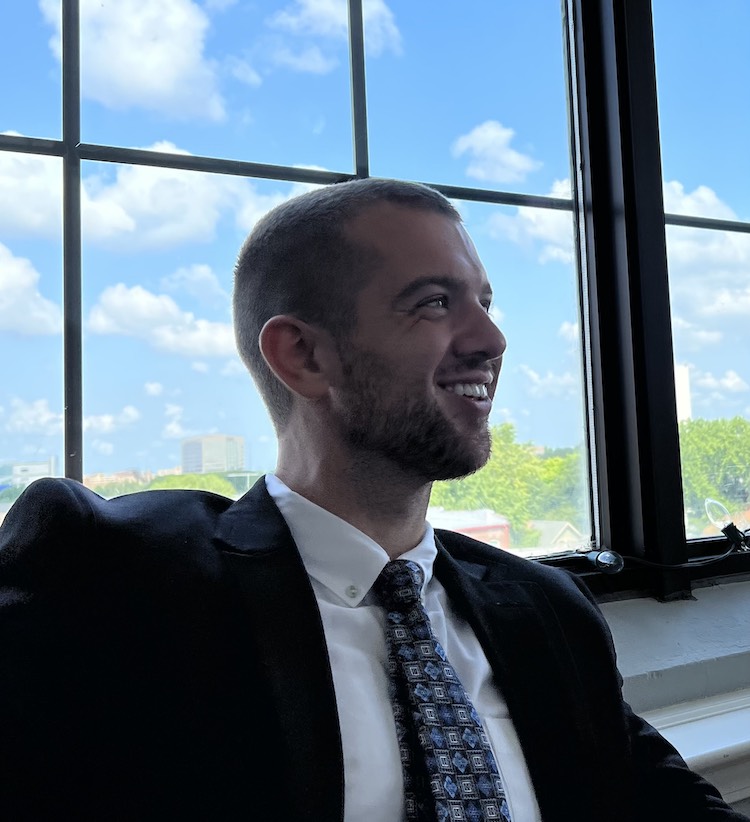
With a career marked by a reputation for excellence, Josiah Swinney is a formidable criminal defense attorney who practices in the Indiana Federal Courts. Call Josiah directly at 317-753-7134 for a free consultation.
- Home
- Federal Criminal Defense Attorney in Indiana
- Federal Defense vs. State Defense: Key Differences
- Areas of Federal Criminal Defense
- Federal Sentencing: What You Need to Know
- The U.S. Sentencing Guidelines
- Mandatory Minimum Sentences
- Departures and Variances
- Criminal History and Enhancements
- Post-Sentencing Considerations
- Why Josiah Swinney Is Your Trusted Federal Criminal Defense Attorney
- Compassionate, Client-Focused Representation
- Contact Indiana Federal Defense Attorney Josiah Swinney Today
Federal Criminal Defense Attorney in Indiana
When facing federal criminal charges in Indiana, you need a dedicated and experienced federal criminal defense attorney who understands the complexities of the federal justice system. Josiah Swinney, a skilled criminal lawyer practicing in Indiana, is committed to providing aggressive, strategic, and compassionate representation to individuals accused of federal crimes. With extensive experience defending clients in the U.S. District Courts for the Northern and Southern Districts of Indiana, Josiah Swinney offers personalized legal strategies to protect your rights and achieve the best possible outcome. Whether you’re facing charges related to drug crimes, drug dealing, firearm possession, white-collar crimes, or other federal offenses, Josiah Swinney has the expertise to navigate the high-stakes federal court system on your behalf.
Federal Defense vs. State Defense: Key Differences
Federal criminal defense differs significantly from state defense due to the nature of the laws, courts, and penalties involved. As a federal criminal defense attorney, Josiah Swinney represents clients charged with violating federal statutes, which are codified in the United States Code. These cases are prosecuted in federal district courts, and Indiana has two such courts: the U.S. District Court for the Northern District of Indiana and the U.S. District Court for the Southern District of Indiana. Federal crimes often carry harsher penalties and longer sentences compared to state offenses, making it critical to have a knowledgeable criminal lawyer by your side.
In contrast, state defense involves defending clients accused of violating Indiana state laws, as outlined in Title 35 of the Indiana Code. State cases are handled in county-level courts across Indiana, and while serious, the penalties are generally less severe than those in federal court. Federal cases often involve complex investigations by agencies like the FBI, DEA, or ATF, requiring a criminal defense attorney with specialized expertise in federal procedures. Josiah Swinney’s extensive experience ensures that clients facing federal charges receive tailored representation to address the unique challenges of their case.
Areas of Federal Criminal Defense
Josiah Swinney has a proven track record of defending clients against a wide range of federal crimes. His practice focuses on the following key areas, each requiring a nuanced and strategic approach:
- Violations of Federal Law: These include offenses under Titles 18 and 26 of the U.S. Code, such as white-collar crimes and certain sex crimes. White-collar crimes, including bank fraud, health care fraud, tax evasion, money laundering, and securities violations, often involve complex financial transactions. For example, bank fraud may stem from allegations of falsifying documents to secure loans, while health care fraud could involve fraudulent billing schemes targeting Medicare or Medicaid. Certain sex crimes under federal jurisdiction also demand a criminal lawyer with both sensitivity and expertise. Josiah Swinney meticulously analyzes the evidence in these cases to build a strong defense.
- Crimes Crossing State Lines: Offenses involving multiple states, such as drug trafficking or kidnapping, fall under federal jurisdiction. Drug trafficking, one of the most common federal charges, often involves large-scale operations and allegations of drug dealing, distribution, or manufacturing. These cases carry severe penalties, including mandatory minimum sentences. Kidnapping across state lines also triggers federal prosecution, requiring a criminal defense attorney with experience in multi-jurisdictional cases. Josiah Swinney’s strategic approach ensures that every aspect of these complex cases is thoroughly addressed.
- Crimes Involving Federal Property: Offenses committed on federal property, such as national parks, military bases, or federal buildings, are prosecuted in federal court. Examples include trespassing on National Forest Lands or setting timber afire. While less common, these charges can result in significant penalties, and Josiah Swinney’s expertise ensures that clients receive a robust defense tailored to the specifics of their case.
- Crimes Against the Government: These include serious offenses like rebellion, insurrection, or acts of terrorism, such as nuclear terrorism. These charges are rare but carry extreme consequences, including lengthy prison sentences or life imprisonment. Josiah Swinney’s experience as a federal criminal defense attorney ensures that clients facing these grave accusations receive comprehensive and aggressive representation.
Federal Sentencing: What You Need to Know
Federal sentencing is one of the most critical aspects of a federal criminal case, and it differs significantly from state sentencing. Governed by the U.S. Sentencing Guidelines, federal penalties are often more severe, with complex rules that require an experienced criminal lawyer to navigate. Josiah Swinney is well-versed in the intricacies of federal sentencing and works diligently to minimize the impact on his clients.
The U.S. Sentencing Guidelines
The U.S. Sentencing Guidelines, established by the United States Sentencing Commission, provide a framework for determining penalties in federal cases. Each offense is assigned a base offense level, which is adjusted based on factors such as the severity of the crime, the defendant’s criminal history, and any aggravating or mitigating circumstances. For example, drug crimes like drug trafficking or drug dealing are subject to mandatory minimum sentences, particularly when large quantities of controlled substances, such as cocaine, methamphetamine, or fentanyl, are involved. Firearm possession in connection with drug offenses can increase the offense level, leading to harsher penalties.
Under the guidelines, a first-time offender charged with drug trafficking involving a significant quantity of drugs may face a base offense level of 26 or higher, resulting in a sentence of 63 to 78 months in prison. If a firearm was possessed during the offense, the guidelines may add two or more levels, increasing the sentence to 78 to 97 months or more. Josiah Swinney carefully analyzes the guidelines to challenge enhancements and advocate for mitigating factors, such as a minor role in the offense or a lack of prior criminal history, to secure a more favorable outcome.
Mandatory Minimum Sentences
Many federal crimes, particularly those involving drug trafficking, drug dealing, and firearm possession, carry mandatory minimum sentences. For instance, under 21 U.S.C. § 841, distributing 500 grams or more of cocaine triggers a mandatory minimum sentence of five years, while 5 kilograms or more increases the minimum to ten years. Firearm-related offenses, such as possession of a firearm in furtherance of a drug trafficking crime under 18 U.S.C. § 924(c), carry a mandatory minimum of seven years if the firearm was brandished, and these sentences must be served consecutively.
Josiah Swinney’s approach involves exploring all possible strategies to avoid or reduce mandatory minimums. This may include negotiating plea agreements, challenging the quantity or type of drugs attributed to the defendant, or arguing for safety valve provisions, which allow certain non-violent, low-level offenders to receive sentences below the mandatory minimum.
Departures and Variances
While the sentencing guidelines provide a framework, federal judges have some discretion to depart from the recommended range. A downward departure may be warranted if the defendant provides substantial assistance to the government, such as cooperating in other investigations. Judges may also impose a variance, sentencing outside the guideline range based on factors outlined in 18 U.S.C. § 3553(a), such as the defendant’s character or the need to avoid unwarranted sentencing disparities. Josiah Swinney leverages his expertise to advocate for departures and variances, presenting compelling arguments to secure shorter sentences for his clients.
Criminal History and Enhancements
A defendant’s criminal history significantly impacts federal sentencing. The guidelines assign points based on prior convictions, with more points leading to a higher sentencing range. A defendant with no prior convictions falls into Criminal History Category I, while those with multiple convictions may fall into Category VI, increasing their potential sentence. Josiah Swinney meticulously reviews a client’s criminal history to ensure accuracy and challenge any errors that could inflate the sentencing range.
Enhancements can further complicate sentencing, particularly in drug trafficking cases where factors like a leadership role, the use of minors, or distribution near a school can increase the offense level. Firearm possession enhancements are also common in drug-related cases. Josiah Swinney works diligently to challenge the applicability of these enhancements, minimizing their impact on sentencing.
Post-Sentencing Considerations
The sentencing process doesn’t end with the judge’s decision. Defendants may be eligible for programs like the Residential Drug Abuse Program (RDAP), which can reduce their sentence by up to one year upon completion. Supervised release, a period of monitoring after prison, can last several years and impose strict conditions. Josiah Swinney advises clients on post-sentencing options and works to ensure that supervised release terms are fair and manageable. If you need assistance with post-sentencing considerations, Josiah can help you with these matters as well.
Why Josiah Swinney Is Your Trusted Federal Criminal Defense Attorney
Josiah Swinney brings unparalleled expertise to defending clients against federal charges in Indiana. His practice focuses on a wide range of federal crimes, including:
- Drug Crimes and Drug Dealing: From possession with intent to distribute to large-scale trafficking conspiracies involving substances like cocaine, methamphetamine, or fentanyl.
- Firearm Possession: Including charges under 18 U.S.C. § 924(c) for possession of a firearm in furtherance of a drug crime.
- White-Collar Crimes: Such as bank fraud, health care fraud, tax evasion, money laundering, and securities violations.
- Federal Sex Crimes: Including offenses under federal jurisdiction.
- Crimes on Federal Property: Such as trespass or arson on national parks or military bases.
- Crimes Against the Government: Including rebellion, insurrection, and acts of terrorism.
Josiah Swinney’s comprehensive approach involves challenging the prosecution’s evidence, negotiating plea deals, and advocating for reduced sentences. His deep understanding of federal law and procedure ensures that clients receive a robust defense tailored to their specific case.
Compassionate, Client-Focused Representation
Facing federal charges can be overwhelming, but Josiah Swinney is committed to providing compassionate and aggressive representation. He takes the time to understand each client’s unique situation, ensuring that their defense strategy is personalized and effective. Whether you’re facing charges for drug trafficking, firearm possession, white-collar crimes, or other federal offenses, Josiah Swinney will fight tirelessly to protect your rights and future.
Contact Indiana Federal Defense Attorney Josiah Swinney Today
If you or a loved one is facing federal criminal charges in Indiana, don’t wait to seek legal help. The federal justice system is complex and fast-moving, and early intervention by a skilled criminal attorney can make all the difference. Contact Josiah Swinney today to schedule a consultation and begin building your defense. As a dedicated federal criminal defense attorney in Indiana, Josiah Swinney is here to provide the experienced, client-focused representation you need to navigate this challenging time. Call Josiah directly at 317-753-7134 for a free consultation.
DISCLAIMER – The information contained on this website is provided for educational and informational purposes only, and should not be construed as legal advice or as an offer to perform legal services on any subject matter. The content of this web site contains general information and may not reflect current legal developments or information. The information is not guaranteed to be correct, complete or current. We make no warranty, expressed or implied, about the accuracy or reliability of the information at this website or at any other website to which it is linked. Recipients of content from this site should not act or refrain from acting on the basis of any information included in the site without seeking appropriate legal advice on the particular facts and circumstances at issue from an Indiana Criminal Defense attorney or attorney licensed in the recipient’s state. Nothing herein is intended to create an attorney-client relationship and shall not be construed as legal advice. This is not an offer to represent you, nor is it intended to create an attorney-client relationship.